A world “on the loose”.

mess

We are witnessing a world “on the loose”; a world that is losing order; a world that is losing its humanity and dignity.

One does not need to go far back in time to observe the collapse of the world’s structure after World War II. Following millions of casualties and the total destruction of cities and towns during the massive conflict, the victors at that time came together with a new social concept called “human rights”, trying to convince everyone that this concept is the most important.

What we are seeing now is that the prevailing languages amongst the “super powers”, the “civilized” nations, and the developing nations are violence and viciousness!

What is more alarming is the general acceptance by the majority of the world population that hostilities and conflicts ending in bloody consequences are normal courses of action. The moral standard of the human species seems to be declining as time passes. The selfish concept of “us versus them” creates this double “measurement” standard. As long “harm and misery” are being inflicted on “the others”—who may be from a different culture, religions or race—then it becomes tolerated, sometimes with carelessness and negligence.

For example, Syria’s human tragedy has been overlooked for years. Here in the West, we count the number of refugees trying to reach our land and all we do is condemn and denounce. The bloodshed knows no boundaries. The Middle East is in hot water with instability from one location to next. Regional and international powers fight through proxies. No one seems to care about the despair, loss of loved ones, devastation, poverty and frustration being inflicted. What do we expect after all these miseries?

Adding insult to injury, we rush, within what we believe to be the free world, to elect bigots into office. From North America to Europe, all that we see are people competing on clearly bigoted platforms to be legislators and rulers of these nations. This trend is becoming clearer by the day. Discrimination, stereotyping, bullying, and harassment is the content seen in many public speeches of potential office winners, openly applauded by so many. Slogans of human rights, civil liberties, women equality, justice, and fairness are all ignored in the face of this new political tendency.

It’s scary how things could turn. It’s time for people with ethics, intellect, principles, faiths, and universal values to unite as one voice and join the efforts to stand up for peace, unity, humanity against the violence of all sorts, and discrimination of all forms. It’s said that tyrants do not only rule due to the support and backing of a number of powerful interest groups but also due to the silence, inaction and passiveness of the equally powerful majority.

*Samer Majzoub, Canadian Muslim Forum (FMC-CMF) president.

Canada’s Anti-Islamophobia Motion A Shining Example To The World.

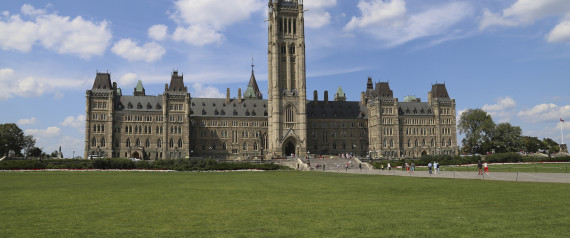
Parliament Hill, Peace Tower, Ottawa,

Parliament Hill, Peace Tower, Ottawa,

http://www.huffingtonpost.ca/samer-majzoub/anti-islamophobia-canada_b_12881610.html

On Oct. 26 2016, the House of Commons, Canada’s Parliament, adopted unanimously a motion to condemn all forms of Islamophobia in the country.

The fact that the motion received no objection from any of the federal parties shows that the Liberal, NDP, Conservative and Bloc Quebecois members have a clear understanding that Islamophobia is a severe form of bigotry and is not a simple subject that can be ignored anymore. It has become a critical illness that raises concerns and requires a forceful push back from the federal legislators that represent all Canadians to denounce Islamophobia.

Canada, united in standing up for human values, will be on record as the first country in the Western world to adopt a motion that contains clear wordings expressing denunciation of any sort of bigotry towards citizens based on their religious and cultural background. This move has sent a strong message to xenophobes that their acts of violence, whether verbal, moral or physical, have been rejected, and that their beliefs stand against everything that Canada prides itself on: inclusion, equality and peace. Moreover, Canada can now be provided as an actual example to the world that nations are stronger through the diversity of their population.

This move has sent a strong message to xenophobes that their acts of violence, whether verbal, moral or physical, have been rejected.

It’s rational to say that the notion of inclusion of all people that share a common land within an identified border is the most effective tool and approach to secure peace, harmony, equality and fairness.

Democratic states have carried titles of freedom, liberty and human rights slogans for a long period of time. We have been witnessing for the last two decades or so that some governments try or adapt official policies that lead to social friction amongst cultural, religious or ethnic lines. These strategies, despite appearing to be pay off through some political gains for a very limited period of time, certainly will end in devastating consequences that lead to social tensions that can be easily avoided.

By the same token, exclusion of groups of citizens because of their social, spiritual or intellectual convictions, skin colour or political views may lead to feelings of isolation and negligence, especially in the youth segment of society. This may lead some of youth to turn to inappropriate actions, creating a generation that is looked at and dealt with as second-class citizens and under siege at all times.

Canada has proudly taken a step in enhancing human values.

Anti-Semitism, racial profiling, islamophobia, bashing of any culture or race are all characteristics of bigots and portraits of racists. They are the individuals who rush to express their hatred and hostility toward any inclusive move and mind-opening exchange toward citizens of all faith, beliefs and views. Societies across the universe have suffered at the hands of these extremists elements that target all those who do not belong to their line of philosophy.

Canada has proudly taken a step in enhancing human values by condemning Islamophobia. The concepts of hate speech, bigotry and stereotyping have received a blow from the moral gesture taken by the House of Commons, the house that represents citizens from coast to coast, in unanimous consent without the opposition of any of the legislators on the floor.

The next step is for the federal government to set up policies and orientations to address and deal profoundly at all levels, social, economical and political, with Islamophobia symptoms that present themselves strongly in our society. Canada is exceptional in its values and human standards, and can remain the multicultural icon of the world with the continued condemning of bigotry.

Samer Majzoub is the president of the Canadian Muslim Forum (FMC-CMF).

Islamophobia Is Now A Canadian Concern

islamophobia-is-now-a-canadian

http://www.huffingtonpost.ca/samer-majzoub/islamophobia-canadian-concern_b_12533736.html

*By Samer Majzoub

The notion of discrimination has been the plague of humanity since forever. People have been targeted and persecuted for their skin colour, religious affiliation, race, nationality and others attributes. History is full of bloody periods where men, women and children have been exposed to violent hostility and deadly means for no reason besides their unique identities which their aggressors have used as pretext for crimes and atrocities inflicted upon them.

In the present days, at the time where the human civilization declares its superiority, new forms of hatred and bigotry have come to light. Modern stereotyping and what is considered to be the old fanatic stereotyping share many parallels, one of which is that both are discriminatory towards groups of people due to attributes of their identity, race, convictions and cultural background. The “new concept” of discrimination has been demonstrated under various titles, such as racial profiling, anti-Semitism and Islamophobia.

In 2010, the Canadian Muslim Forum (FMC-CMF) had led a community delegation to the House of Commons in Ottawa Hill. The objective of that parliamentary day was to create awareness and shed more light to the legislators over the notion of Islamophobia and the very troubling sharp increase in reported incidents that were related to this issue. Statistics and points of discussions were presented. Concerns over the moral and physical violent incidents against Canadians because of their visible religious identity had been some of the focus points brought up during the trip to Parliament that day.

As the years have passed, the Canadian Muslim Forum (FMC-CMF), community organizations, activists, human rights groups, some public figures, intellectuals, elected officials and others have kept their worries very well exposed over the intensification of Islamophobia in the country.

Media statements, seminars and lectures, raising the subject matter to elected officials and creating awareness amongst the communities and the general public have all been means used to demonstrate the danger of letting hatred and intolerance prevail, which would lead to a toxic environment by bringing up friction within the society and creating fear in the hearts and minds of young Canadians who have been victims of verbal and physical aggressions by bigots and hatemongers.

In early 2015, the Canadian Muslim Forum (FMC-CMF), in a press conference held in Montreal, voiced citizens’ frustrations and denunciations over using the Muslim community as a political football by certain politicians in hopes of gaining more votes during election periods. Furthermore, there were notes over the role of a few media outlets in inflaming Islamophobia during these times.

As hate speech moves from being a phenomenon to a social disease, some politicians, public figures and other media outlets joined in on the warnings expressed previously that Islamophobia has to be stopped, rejected and deplored. On Oct 1, 2015, Quebec’s National Assembly came together to condemn Islamophobia. Furthermore, more declarations started to be heard from various sides, whether from the governmental ruling side or the opposition side, all joining together to warn against the looming upsurge of hate speech.

The tackling of Islamophobia as a Canadian issue took another step ahead on the ladder of interest in the country. On June 8, 2016, a petition had been initiated by myself and sponsored by Frank Baylis, federal Liberal MP of Pierrefonds-DDO, calling on the House of Commons to condemn all forms of Islamophobia in Canada. The petition known by e-411 collected close to 70,000 signatures, making it the most signed online petition in the history of the House of Commons. Canadians from coast to coast showed their support for the request that the petition carried to denounce discrimination against Muslim citizens.

Based on the solid support that the petition e-411 got from Canadians, a motion to condemn all forms of Islamophobia was submitted, on Oct 5, 2016, to the House of Commons for unanimous approval by all MPs. Although the unanimous motion didn’t pass through due to the refusal of a small group of Conservative representatives out of the 338 members in the House of Commons, the fact that it earned the consent of the vast majority of other legislators proves that the Islamophobia is becoming a true Canadian concern.

Surely, the trip to recognize and to condemn discrimination, as it is a total contradiction to Canadian values, has not come to an end yet. Canadians from all stripes of social, political, racial and religious backgrounds are coming together at a much faster pace to stand united up to hate and smear campaigns against their fellow citizens.

Samer Majzoub, E-411 petition initiator

Condemning Islamophobia Promotes Human Values!

Yesmeena Buzeriba (C) chants along with other students at a rally against Islamophobia at San Diego State University in San Diego, California, November 23, 2015.  REUTERS/Sandy Huffaker

http://www.huffingtonpost.ca/samer-majzoub/condemning-islamophobia-canada_b_11150012.html

The initiation of the online petition e-411, sponsored by Frank Baylis, the Federal Liberal MP of Peirrefonds-Dollard, comes at a time when extremists from every side are attempting to hijack civic peaceful societies and cause friction amongst groups of people through destructions and devastation.

The world has witnessed many dangerous events: violent “lone wolf” individuals, who are ready to commit bloody criminal attacks on civilians in the name of a religion, extremist groups, politicians; and persons who engage in hate and discriminatory smear campaigns, and people who attack citizens on the streets based on their faith and visible dress codes.

As if this miserable view is not enough, North America is observing a surge in racial tensions, with law enforcement forces being accused of discriminatory use of deadly force against men based on their skin colour. On the other hand, police officers are being ambushed and shot dead by angry individuals.

Canada is witnessing a sharp increase in Islamophobia, which has even been described as an “epidemic” in certain large areas of the country. Citizens are aggressively and physically attacked on the streets, shopping malls, and community centres. Moreover, places of worship are being firebombed and vandalized. Islamophobic political campaigns have become very troubling, mainly during theelection periods. Furthermore, some media outlets add salt to the wound by becoming venues for anti-Muslim rhetoric under the justification of “freedom of speech,” which seems to be without boundaries and irresponsible when it comes to bashing Islam and Muslim citizens.

All human beings deserve to live in peace and safety.

Under this gloomy climate, citizens from all aspects of society, responsible media, and honest, elected decision makers have the civil duty and moral obligation to stand up united to denounce all sorts of discrimination and prejudice. To come together with initiatives that clearly condemn and refuse any act, talk and policies that lead to hatred, hostility and lack of harmony within society.

On June 2nd 2010, The Canadian Muslim Forum (FMC-CMF) led delegations consisting of representatives, young professionals, activists, women advocates and others on Parliamentary Day at the Hill. The main objective of meeting the Federal parties’ caucuses on that day was to introduce and express concerns about Islamophobia, and its impact on Arab and Muslim citizens. From that day, the most noticeable remark was that most of the policy makers were not fully aware of the dangers of Islamophobia, and its implications on Canadian society.

After a long and, at times, very hard journey, Islamophobia is currently recognized as a harsh reality that needs a strong political will and social awareness to undertake, engage in, deal with and find concrete solutions and remedies to cure such an “epidemic” phenomenon and terminate its harmful symptoms from the society at large.

All human beings deserve to live in peace and safety. Attacking women because of their visible faith as they stroll around a shopping mall or take the metro to school or work, denying jobs because of a candidate’s name and background, and vandalizing community and religious properties should stop once and for all. Such aggressions are against woman’s rights, human dignity and the integrity of Canadian society.

Mr. Frank Baylis, federal MP, Pierrefonds-Dollard, recently said on Le Huffingtonpost, “I am against all forms of discrimination. That’s why I am supporting this petition (e-411). It’s not a petition for Muslims; it’s a petition against discrimination.”

Violent extremism represents itself. The perpetrators of acts of devastation have not been voted for to speak on behalf of any religion, cultural or human groups.

Civilized people stand up against all kinds of prejudice, hate-speech, unfairness and intolerance that are expressed in various forms of bigotry, such as anti-Semitism, racial profiling, bias based on personal orientation and Islamophobia. Such a noble stance promotes human values, civil rights and enhances equality amongst all.

Samer Majzoub, initiated of petition e-411


Article: The Rise And Fall Of The Megastore

Morning in Laramie

by Samer Majzoub

http://www.huffingtonpost.ca/samer-majzoub/rise-and-fall-of-megastores_b_9860996.html

Establishing or expanding retail department stores to new market requires in-depth knowledge and profound business study. The focus should be on crucial data such as: social dimensions, population taste, habits, life styles, financial capacity and historical spending trend of the targeted clientele.

Furthermore, a highly professional and precise business plan should be the root of the final decision whether to proceed with the new venture or not. Defaulting or missing any of the detailed investigation and analysis of the subject matter may end up in fatal failure and the loss of millions of dollars and hundreds of employees.

The main strategy for any firm is to create a concept that is so different and persuasive that it places competitors in very difficult situations and unable to copy or react to it, and then to apply that concept in such a way that core customers stay loyal. Another main method of the continuation of successful department stores is to maintain a distinctive offering that attracts an extremely loyal customer base.

Exploring more of the base elements for a successful business is to have a clear vision that connects products to core customers. Successful execution of the business concept is another factor that is needed for business to flourish and carry on. By developing culture and a set of values, the business will keep attracting the core customers to its customs and traditions. The strong bond between the services/products offered and the core clientele of any retail department store means profitability and continuity of the business project. Celebrating the work success with customers gives them their sense of belonging, strengthens the loyalty to the store chain and toughens its root presence in the market.

Other fundamentals that are significant to the success of retails departments can be summarized by crucial tips such as location — choosing your location is the most important step in making your dream of a successful department store come true, stocking shelves with merchandises — filling up the stores with products and commodities will positively give the clientele to more options of items choice, and keeping the theme of the chain stores. All these tips are crucial tools used in maintaining loyal customers committed to buying and promoting your business to higher levels.

An illustration of the securing elements of success for department stores is the Wal-Mart success story. The chain store had come into the Canadian market with a strong concept of “discount.” It created a culture that has been appealing to its core clientele since then.

In 1994, the year Wal-Mart first came onto the scene in Canada, it presented lines of products that competed, with great achievement, against their “rivals”. The chain has filled up the shelves with a great variety that is affordable for most social classes. Wal-Mart waited 12 years, until 2006, to open its first supercenter store. It took more than a decade for the establishment to expand in size, having studied the market thoroughly and experienced all its dimensions rigorously.

In cases where big chain stores decide to move to a new market, one might think that the CEO would never sign off on the idea unless thorough “homework” has been done. However, this is not always the case. Some of the big names in the market may have their big move without proper groundwork and a detailed plan to address the requirements of the new venture.

One of the risky steps that may be taken by big department stores is to expand fast, wide and large. Establishing numerous new stores in a wide geographical area in a short time period puts tremendous pressure on the operational system of the new outlets. Such a huge move requires high management skills, effective marketing approach, competitive pricing, efficient distribution centers, and strong human resources that execute the work timely and fashionably.

A clear example of a big fiasco that reflects the ill business decision making of random expansion on lose ground was the failure of Target in the Canadian market. In 2013, Target took a bold decision to expand internationally from the States to Canadian soil. The chain store had in mind that Canadians have been cross-border shopping from its department stores for years, so why not moving to Canada and offering direct services to its loyal clientele. Under the shadow of $4.4 billion expansion plan, Target bought more than 120 Zellers stores from the Hudson Bay Co. in 2011. In less than two years, the huge Target chain stores announced that they are pulling out of the market by the year’s end, incurring a loss of two billion dollars.

Many experts had begun analyzing and explaining why Target had witnessed such a disastrous failure in Canada while the chain store continued to witness success in the American market. There is consensus among the experts that one of the apparent reasons that Target failed in the Canadian market was their failure to keep their shelves filled with the expected products. It had been an extreme challenge to establish a solid, working distribution mechanism that was able to properly allocate the products to over 100 stores. The distribution default had led to waves of client complaints over the lack of merchandise in the stores\ shelves.

Another factor of the Target expansion failure had been the location of its newly bought stores. Having bought Zellers locations, many have criticized these spots as non-suitable settings for Target’s bigger space requirements. To add more complexity to the expansion process, Target had to renovate all of Zellers stores in a one year period. This task by itself needed tremendous work, time management and cost in order to meet the deadline for the chain to open its stores. The process ended up as an unfinished task, and yet still the stores had to be opened on time.

A third element that had added pressure to the malfunctioning of Target stores in Canada was the high pricing competition from its competitors. Overestimation of the potential market, and the fact the stores’ products were not appealing to the customers, had been an additional pressuring factor on the chain’s already great running difficulties.

No one can deny the fact that establishing and operating successful big chain stores is a great challenge that requires a full set of decision making expertise, management skills, operational experience, effective marketing plans and human resources in order to have the work run on the right track. Flying blind and having no background information on the market to decide which expansion should be planned is a devastating recipe for any work affair. Any new venture should have its conditions and details met and respected completely in order to make it a success stor

Morning in Laramie

Morning in Laramie

Multiculturalism Is A Canadian Success Story. *Samer Majzoub

Canadian flag

Throughout the years, the nation of Canada, as we are aware, became a land of immigration, a home to millions of people from different lands, ethnicities, cultures and religious beliefs. Every new comer that has settled in Canada in the last few hundred years and those who will settle in the future share one common name: “immigrants.”

*Samer Majzoub

http://www.huffingtonpost.ca/samer-majzoub/multiculturalism-in-canada_b_9388576.html

The Difference Between Community And Religious Schools

world religions - major religions group

Article by Samer Majzoub,

The word “religion” in the context of the Western contemporary societies that originated in Europe is more of a theological doctrine, while in some societies originating in other part of the world, it reflects cultural identity, rituals, conviction and social habits….

http://www.huffingtonpost.ca/samer-majzoub/religious-schools_b_9164896.html


We Need To Make A Collective Effort To End Violent Radicalism

Authorities investigate the scene where a police shootout with suspects took place, Thursday, Dec. 3, 2015, in San Bernardino, Calif.  A heavily armed man and woman opened fire Wednesday on a holiday banquet, killing multiple people and seriously wounding others in a precision assault, authorities said. Hours later, they died in a shootout with police.  (AP Photo/Jae C. Hong)

http://www.huffingtonpost.ca/samer-majzoub/end-violent-radicalism_b_8746608.html

*Samer Majzoub
The concept of radicalism that leads to violence through history has always, similar to all other philosophical doctrines, sought to justify its movement based on mainly social, economical and political reasoning.
“Religions” have been, in recent times, added to the catalogue that violent radicals use to legitimize their acts, and as mean of delivering their objections to what they consider “injustice.” This addition of “religious” reasoning to violent operations has made the subject much more sensitive, confusing and complicated.

Oct 19 2015, “Canadian Values” victory-day: inclusion over exclusion!

federal-leaders-620

Samer Majzoub, Recipient of Queen Elizabeth II Diamond Jubilee Medal ; President of Human right’s advocacy group ; Recipient of many recognition awards.

The call for the 42nd Federal Canadian  election was issued by the Governor General David Johnston on   August 4. The subsequent campaign spanned 78 days from the dissolution of Parliament to the election, one of the longest campaigns in Canadian history. This was also the first time since the 1930 election when a Canadian Prime Minister tried to win a 4th consecutive term in power.

The main parties’ standings at dissolution of the 41st Parliament was 159 seats for the Conservatives, 95 for the NDP, 36 for the Liberals and 2 for the BQ. From the early stages of the election campaign, it was clear that it would be a hard-fought election due to what was considered a 3-way race between the three main federal parties, CPC, PLC and NDP.  The NDP, being a front-runner, gave this particular election more enthusiasm as historically the Conservatives and Liberals have always ruled the country.

As the elections campaign persisted, polls were clearly showing that Canadians wanted change after almost a decade of Conservatives rule. In spite of the conservatives’ extensive elections media campaign presenting Mr. Stephan Harper as the best leader for the country, by early September, surveys of Canadians had shown the contrary: they were looking for a new PM. All indications were obviously directing towards a new resident at 24 Sussex Drive  in Ottawa, the nations’ capital, on Oct 19.

The three main competing parties, CPC, PLC and the NDP put up strong media campaigns targeting voters with their political platforms. The parties’ leaders wasted no time to present their arguments and points of views over various subjects and topics. This continued until Sept 15 when a Federal Court of Appeal panel dismissed a government appeal over a ban on face coverings at citizenship ceremonies in what amounts to a major policy rebuke of the Harper government. At this point, the election campaign witnessed a sharp spin towards what has been considered by many as ugly and horrible conducts by the Conservatives adopting a very divisive approach and rhetoric in hopes of winning the election.

The Conservative era in the last decade has been overshadowed by controversial policies in many aspects, but mainly by human rights violations under security excuses. The Conservative government ended its ruling period with the very contentious bill C51 and bill C24. Both bills have been considered “ as an attack on constitutional freedoms and an “extraordinary inversion” of the role of judges”  and  “a two-tiered system in which naturalized Canadians are treated as second-class”     .

The election rhetoric based on fear-mongering against women who wear the niqab took over air waves, campaigns, interviews and polls. The campaign turned women’s safety and rights into a political game that distracts from the realities and significant concerns of Canadians. Muslims and Arabs have been problematized as not only a security problem, but as a socio-cultural problem in Canada. The Conservatives thinking they will win more votes from the niqab controversy, sank deeper into their conflict-ridden political campaigns. What made such negative policy bitter is the fact it was run by the prime minister of the country whose main role is to unite Canadians and protect women’s rights.

Muslim Canadians felt and without prior notice that they have been used as a political football for election purposes. The majority of Canadians started to believe that the Muslim community is being used to capitalize on misconceptions and to create fear in the hearts and minds of fellow citizens. As a result, in the midst of the elections movement the xenophobic and Islamophobic sentiments hit a peak and the expected constructive political debates during campaigns turned to be theaters where Islamophobia became a free-for-all scene.

As the election campaign came to its last session, it became clear that the niqab debate that was initiated to the advantage of the Conservatives had back fired.  Mr. Harper relied on polls he ordered himself and bet big time on the niqab debate and lost. Canada is a great country by all means. It can’t accept bigotry, hatred and discrimination. Canadians, on Oct 19 2015, made it clear and loud: yes to inclusion no to exclusion.  The majority of Canadians chose the Federal political parties that have championed Canadian values of unity, harmony, equality and freedom of choice to represent them in the House of Commons. The election results will send a strong message to those politicians who have pursued campaigns of hate, prejudice, Islamophobia, fear and division amongst Canadians that they have harvested what they have planted, loss and defeat.

Samer Majzoub is president of the Canadian Muslim Forum (FMC-CMF).

These two Quebec Bills Are Apparently Targeting Muslims

Quebec Premier Philippe Couillard takes part in the closing press conference following Canada's Premiers meeting in Ottawa on Friday, January 30, 2015. THE CANADIAN PRESS IMAGES/Sean Kilpatrick

Quebec Premier Philippe Couillard takes part in the closing press conference following Canada’s Premiers meeting in Ottawa on Friday, January 30, 2015. THE CANADIAN PRESS IMAGES/Sean Kilpatrick

By Samer Majzoub:

http://www.huffingtonpost.ca/samer-majzoub/quebec-muslims-hate-crimes_b_7621612.html

Recently, the Quebec provincial government tabled two long-awaited bills to the National Assembly.

Bill 62, on religious neutrality, proposes a number of measures that must be taken into account when considering whether to grant an accommodation on religious grounds and, provides that public services must be both delivered and received by persons with their faces uncovered.

Bill 59, proposes the prohibition of hate speech and speech inciting violence that is engaged in or disseminated publicly that targets people sharing a common characteristic identified as prohibited grounds for discrimination in the Quebec Charter of human rights and freedoms.

The Liberal provincial government has aimed to address very controversial subjects that have been dominating Quebec politics for some time, including reasonable accommodation, youth “radicalization,” and increasing incidents of hate speech. Both bills, 62 and 59, include vast measures and action plans. Topics covered in the two bills are so numerous that it appears as if PLQ, the governing Liberals, are aiming to tackle all divisive issues within Quebec society.

In the last few months, about two dozen Quebec youth have been reported to have left or attempted to leave to war zones in the Middle East. Those reports have raised concerns of what has been called radicalization of youth Quebecers. Calls to deal with the subject have dominated official statements and airwaves. While the general reaction to the anti-radicalisation measures proposed by the government has been positive to a large extent, serious concerns have been raised on how the plan will be implemented.

Taking into consideration not to mix between religiously practicing individuals and signs of radicalization is one of the main challenges that will face the civil servants who will be at the forefront of implementing the anti-radicalization action plan. This will require extensive training and knowledge for all the employees involved in the action plan. The employees should not be treating such sensitive cases based on their personal judgment which may lead to failure of the entire intervention action plan.

Another point of concern in the proposed bills is the mandate given to the police to detect signs of radicalization. A question that will arise include, what defines the physical signs of an individual’s radicalization, is it his or her appearance or dress? How do you detect on the street that an individual carries signs of extremism? A major fear is falling into religious profiling. Our societies already suffer from racial profiling; certainly, no one would like to add another hardship to our Quebec communities by poor implementation of such a security mandate.

Hate speech has plagued many aspects of Quebec society for long periods of time. This toxic phenomenon has witnessed a surge recently. One of its worst times came within the period of the previous Parti Quebecois government with the proposed Quebec secular charter. Quebec society witnessed a very dangerous trend of continues smear campaigns against cultural, ethnic and religious groups. Moreover, concerns of extreme speech that may incite violence came as an additional reason for the need to have clear anti-hate speech laws. Such a measure would fight all sorts of discriminatory discourse, such as Islamophobia, anti-Semitism and racial talk. It’s hoped that such an act, if it’s fairly implemented, will heal division, reunite and create harmony within Quebec’s social fabric.

The Quebec Liberal party has been blamed by some for not addressing what has been known as neutrality of the state or the secular charter. Whatever name is given, the concept came down to the prohibition of women from receiving or offering public services while their faces are covered. Depriving Quebec women from public services such as health and education because of their face cover is considered very discriminatory against women’s basic right of being treated as human beings and not discriminated against because of their choice of dress code. Such a provision is a blow to Quebec’s claim to be a pioneer on women’s rights.

Although there are no official statistics, the number of the face covered Quebec women, many of whom are French Quebecer converts, does not exceed a handful. Does this very small number of women, none of whom work in public service, deserve to be put in the spotlight? Is it worth to have the government tabling special laws against their choice of dress code?

Furthermore, the fact that the Provincial government tabled both Bills 59 and 62 at the same time, although, with totally different subjects and topics, has given the impression that the move is targeting one Quebec community — Muslims in particular. Although officials try to deny that they are targeting any group or religion, the way both bills are presented, debated and covered in the media leaves no doubt in the minds and hearts of many Muslim Quebecers that here they are, again, being used as a political football within the province’s political arena.

No one argues for the great need to have bills, laws and social action plans to address important issues of Quebec society such as hate speech, discrimination, extremism, and neutrality of the state. However, it’s not fair to target one group or the other. Although the Muslim community at large doesn’t believe that the provincial government meant to target their population in the province, the government should be working very hard to avoid giving the perception that those bills are targeting Quebec Muslims.

The opportunity and the possibility are still there for officials to remove the impression that such proposed bills are targeting one community by carefully working and avoiding religious profiling in the process of implementing the relevant action plans.