
This article is part of a series of interviews with advocates, legal thinkers, community organizers and academics on issues related to Canadian civil liberties produced by CCLA volunteers.
This article is part of a series of interviews with advocates, legal thinkers, community organizers and academics on issues related to Canadian civil liberties produced by CCLA volunteers.

Quebec Premier Philippe Couillard takes part in the closing press conference following Canada’s Premiers meeting in Ottawa on Friday, January 30, 2015. THE CANADIAN PRESS IMAGES/Sean Kilpatrick
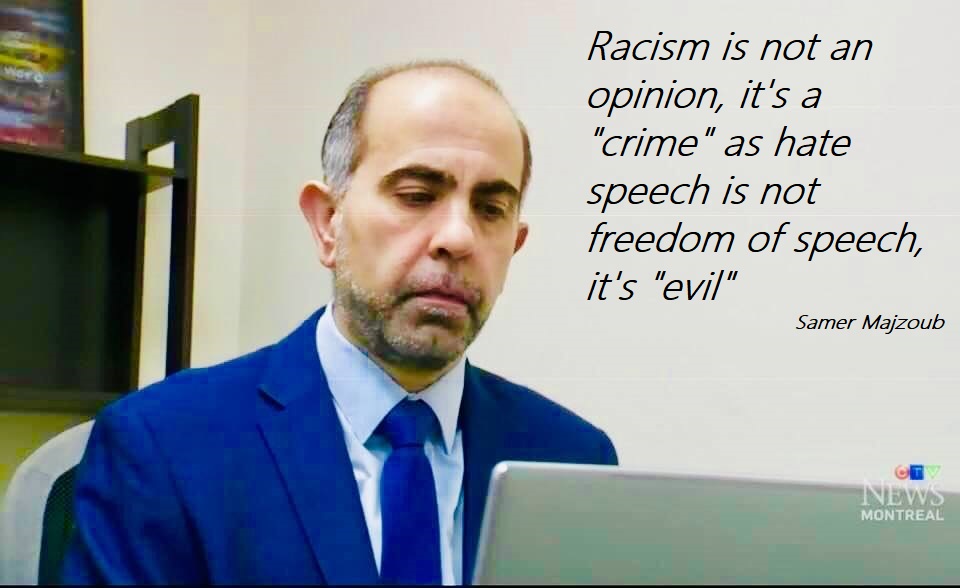
By Samer Majzoub:
http://www.huffingtonpost.ca/samer-majzoub/quebec-muslims-hate-crimes_b_7621612.html
Recently, the Quebec provincial government tabled two long-awaited bills to the National Assembly.
Bill 62, on religious neutrality, proposes a number of measures that must be taken into account when considering whether to grant an accommodation on religious grounds and, provides that public services must be both delivered and received by persons with their faces uncovered.
Bill 59, proposes the prohibition of hate speech and speech inciting violence that is engaged in or disseminated publicly that targets people sharing a common characteristic identified as prohibited grounds for discrimination in the Quebec Charter of human rights and freedoms.
The Liberal provincial government has aimed to address very controversial subjects that have been dominating Quebec politics for some time, including reasonable accommodation, youth “radicalization,” and increasing incidents of hate speech. Both bills, 62 and 59, include vast measures and action plans. Topics covered in the two bills are so numerous that it appears as if PLQ, the governing Liberals, are aiming to tackle all divisive issues within Quebec society.
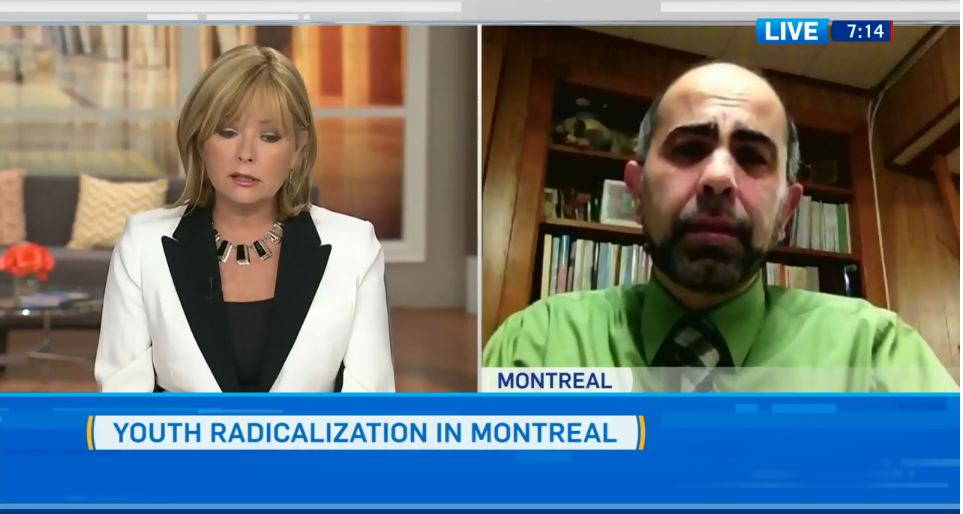
In the last few months, about two dozen Quebec youth have been reported to have left or attempted to leave to war zones in the Middle East. Those reports have raised concerns of what has been called radicalization of youth Quebecers. Calls to deal with the subject have dominated official statements and airwaves. While the general reaction to the anti-radicalisation measures proposed by the government has been positive to a large extent, serious concerns have been raised on how the plan will be implemented.
Taking into consideration not to mix between religiously practicing individuals and signs of radicalization is one of the main challenges that will face the civil servants who will be at the forefront of implementing the anti-radicalization action plan. This will require extensive training and knowledge for all the employees involved in the action plan. The employees should not be treating such sensitive cases based on their personal judgment which may lead to failure of the entire intervention action plan.
Another point of concern in the proposed bills is the mandate given to the police to detect signs of radicalization. A question that will arise include, what defines the physical signs of an individual’s radicalization, is it his or her appearance or dress? How do you detect on the street that an individual carries signs of extremism? A major fear is falling into religious profiling. Our societies already suffer from racial profiling; certainly, no one would like to add another hardship to our Quebec communities by poor implementation of such a security mandate.
Hate speech has plagued many aspects of Quebec society for long periods of time. This toxic phenomenon has witnessed a surge recently. One of its worst times came within the period of the previous Parti Quebecois government with the proposed Quebec secular charter. Quebec society witnessed a very dangerous trend of continues smear campaigns against cultural, ethnic and religious groups. Moreover, concerns of extreme speech that may incite violence came as an additional reason for the need to have clear anti-hate speech laws. Such a measure would fight all sorts of discriminatory discourse, such as Islamophobia, anti-Semitism and racial talk. It’s hoped that such an act, if it’s fairly implemented, will heal division, reunite and create harmony within Quebec’s social fabric.
The Quebec Liberal party has been blamed by some for not addressing what has been known as neutrality of the state or the secular charter. Whatever name is given, the concept came down to the prohibition of women from receiving or offering public services while their faces are covered. Depriving Quebec women from public services such as health and education because of their face cover is considered very discriminatory against women’s basic right of being treated as human beings and not discriminated against because of their choice of dress code. Such a provision is a blow to Quebec’s claim to be a pioneer on women’s rights.
Although there are no official statistics, the number of the face covered Quebec women, many of whom are French Quebecer converts, does not exceed a handful. Does this very small number of women, none of whom work in public service, deserve to be put in the spotlight? Is it worth to have the government tabling special laws against their choice of dress code?
Furthermore, the fact that the Provincial government tabled both Bills 59 and 62 at the same time, although, with totally different subjects and topics, has given the impression that the move is targeting one Quebec community — Muslims in particular. Although officials try to deny that they are targeting any group or religion, the way both bills are presented, debated and covered in the media leaves no doubt in the minds and hearts of many Muslim Quebecers that here they are, again, being used as a political football within the province’s political arena.
No one argues for the great need to have bills, laws and social action plans to address important issues of Quebec society such as hate speech, discrimination, extremism, and neutrality of the state. However, it’s not fair to target one group or the other. Although the Muslim community at large doesn’t believe that the provincial government meant to target their population in the province, the government should be working very hard to avoid giving the perception that those bills are targeting Quebec Muslims.
The opportunity and the possibility are still there for officials to remove the impression that such proposed bills are targeting one community by carefully working and avoiding religious profiling in the process of implementing the relevant action plans.
Recently, the Quebec provincial government tabled two long-awaited bills to the National Assembly, bill 62, http://s3.documentcloud.org/documents/2095671/bill-62-a-proposed-law-on-religious-neutrality.pdf, on religious neutrality, the bill provides a number of measurements that must be taken into account when considering whether to grant “an accommodation on religious grounds” and, provides that public services must be both delivered and received by persons with their faces uncovered. And bill 59, https://www.documentcloud.org/documents/2095670-bill-59-a-proposed-law-to-fight-hate-specch.html , the Act provides for the prohibition of hate speech and speech inciting violence that are engaged in or disseminated publicly and that target a group of people sharing a common characteristic identified as prohibited grounds for discrimination under section 10 of the Quebec Charter of human rights and freedoms.
The Liberal provincial government aimed at addressing very controversial subjects that have been dominating Quebec politics for some time, including reasonable accommodation, youth “radicalization”, and increasing incidents of hate speech. Both bills, 62 and 59, include vast measures, laws and action plans. Topics covered in the two bills are numerous that it appears as if PLQ , the governing Liberals, are aiming to tackle all divisive issues within Quebec society .
In the last few months, about three dozens of Quebec youth have been reported to have left or attempted to leave to war zones in the Middle East. Those reports have raised concerns of what has been called radicalization of youth Quebecers. Calls to deal with the subject have dominated official statements and airwaves. While the general reaction to the anti-radicalization measures proposed by the government have been positive to a large extent, serious concerns have been raised on how the plan will be implemented.
Taking into consideration not to mix between religiously practicing individuals and signs of radicalization is one of the main challenges that will face the civil servants who will be at the forefront of implementing the anti-radicalization action plan. This will require extensive training and knowledge for all the “employees” involved in the action plan. “The employees” should not be treating such sensitive cases based on their personal judgment which may lead to failure of the entire intervention action plan.
Another point of concern in the proposed bills is the mandate given to the police to detect signs of radicalization. Question that will arise include, what defines the physical signs of an individual’s radicalization, is it his or her appearance or dress… how do you detect on the street that an individual carries signs of extremism? A major fear is falling into religious profiling. Our societies already suffer from racial profiling; certainly, no one would like to add another hardship to our Quebec communities by wrong implementation of such a security mandate.
Hate speech has plagued many aspects of Quebec society for long periods of time. This toxic phenomenon has witnessed a surge recently. One of its worst times came within the period of the previous Parti Quebecois government with the proposed Quebec secular charter. Quebec society witnessed a very dangerous trend of continues smear campaigns against cultural, ethnic and religious groups. Moreover, concerns of extreme speech that may incite violence came as an additional reason for the need to have clear anti-hate speech laws. Such a measure would fight all sorts of discriminatory discourse, such as Islamophobia, anti-Semitism and racial talk. It’s hoped that such an act, if it’s fairly implemented, will heal division, reunite, and create harmony within the Quebec social fabric.
The Quebec Liberal party has been blamed by some for not addressing what has been known as neutrality of the state or the secular charter. Whatever name is given, the concept came down to the prohibition of women from receiving or offering public services while their faces are covered. Depriving Quebec women from public service such as health and education because of their face cover is considered very discriminatory against women’s basic right of being treated as human beings and not discriminated against because of their choice of dress code. Such a provision is a blow to Quebec’s claim to be pioneer on women’s rights.
Although, there are no official statistics, the number of face covered Quebec women, many of whom are French Quebecer converts, does not exceed fifty in the province. Does this very small number of face covered women, none of who work in public service, deserve to be put in the spot light? Is it worth to have the government tabling special laws against their choice of dress code?
Furthermore, the fact that the Provincial government tabled both bill 59 and 62 at the same time, although, with totally different subjects and topics, has given the impression that the move is targeting one Quebec community, Muslims in particular. Although, officials try to deny that they are targeting any group or religion, the way both bills are presented, debated and covered in the media leaves no doubt in the minds and hearts of many Muslim Quebecers that here they are, again, being used as a political football within the province’s political arena.
No one argues for the great need to have bills, laws and social action plans to address important issues of Quebec society such as hate speech, discrimination, extremism and neutrality of the state. However, it’s not fair to target one group or the other. Although, the Muslim community at large doesn’t believe that the provincial government meant to target their population in the province, the government should be working very hard to avoid giving the perception that those bills are targeting Quebec Muslims.
The opportunity and the possibility are still there for officials to remove the impression that such proposed bills are targeting one community by carefully working and avoiding religious profiling in the process of implementing the relevant action plans.

Radio interview :
On CBC daybreak, Montreal.
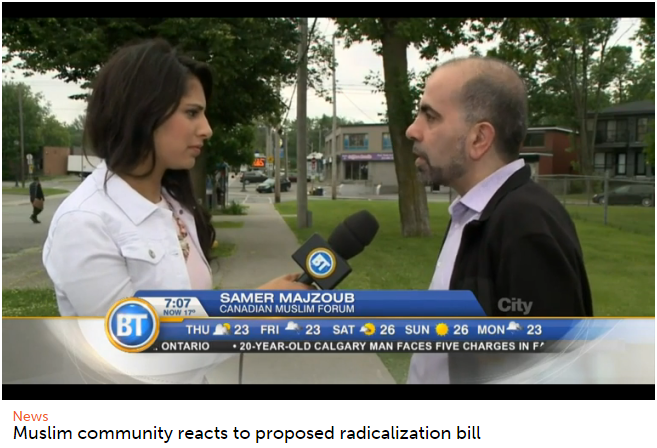
(FMC-CMF) Canadian Muslim Forum commenting this morning on proposed bills 59 and 62!
Samer Majzoub of the Canadian Muslim Forum talks to reporter Aalia Adam about how the Liberals’ proposed bills could lead to a rise in Islamophobia.


(FMC-CMF) Canadian Muslim Forum commenting on the neutrality, anti-radicalization anit-hate speech, bill 62 and bill 59.
CMF comment at min 4:
http://www.cbc.ca/player/News/Canada/Montreal/ID/2669197411/
الاستاذ سامر المجذوب رئيس المنتدى الاسلامي الكندي بداية كيف تصفون ما تتعرض الجالية الاسلامية مؤخرا من حملات غير مسبوقة في الاعلام وما المقصود منه ؟
لاشك ان الجالية تتعرض لحملة كراهية و اسلاموفوبيا قاسية و خطيرة لم نشهد لها مثيل من قبل. و ما يميز هذه الحملة هي تواصلها و استمراريتها بشكل يومي و شديد مستهدفة كل مايمت للجالية من مبادىء و قيم دينية و اجتماعية. و تشمل حملة التحريض هذه كل رموز الجالية من مؤسسات، و مدارس، و شخصيات اعتبارية و تمثيلية.
نعتقد هكذا حمالات ممنهجة تحمل العديد من الاهداف منها السياسي اذ معظم التقارير الصحفية ضد الجالية في كيبيك مصدرها كيان اعلامي ضخم يملك اكثرية وسائل بث المرئي و المكتوب في الاقليم. و صاحب هذا الكيان له طموح سياسي معروف. اضافة لمحاولة قوى سياسية اخرى في كيبيك ركوب موجة الاسلاموفوبيا للضغط على الحكومة الاقليمية لاسباب انتخابية. هذا دون ان نغفل الحالة العنصرية التي قد تكون سائدة حاليا لعدة اسباب منها الاجتماعية بحتة و اخرى تعود لتشويه صورة الاسلام بسبب تصرفات متشددة لأفراد فهموا تعاليم الدين الحنيف بأسلوب لا يمت الى سماحته بصلة.
م تعط بلدية منطقة هوشلاغا الترخيص باقامة مسجد لاحد المشايخ هل تابعتم الموضوع وما هي القصة بالظبط؟
حقيقة هذا الحدث اخذ حجم اكبر بكثير مما يستحق و اتى من ضمن حملة الكراهية المذكورة انفا. الرخصة التي تم رفضها هي لمركز اجتماعي و ليس لمسجد. حصول على ترخيص له شروط متعلقة بقوانين البلدية في المنطقة المذكورة. و لم يحصل ان يتحول امر بسيط بطلب رخصة استخدام مكان الى طوفان اعلامي و تدخل سياسي بهذا الشكل الفج الذي ارفق بتصريحات من هنا و هناك يقع كله في حملة الاسلاموفوبيا التي تقع تحت ضغطها الجالية.
وايضا في منطقة شاوينغن هناك قرار بلدي بمنع اقامة مسجد في المدينة ؟
بدأت نتائج حملة التمييز ضد الجالية تظهر بقرارات مجحفة من هنا و هناك و دون مبررات موضوعية. انما هي نتاج عنصرية واضحة معالم تؤدي بالمجتمعات الى طريق يسوده التوتر و الانقسام. و يؤدي الى الحرمان مجموعات من المجتمع للحقوقها.
تعرض احد علماء الدين لسحب جوازه الكندي من دون اعطاء التبريرات لذلك .. كيف تقرؤون هذا الاجراء وما هي انجع السبل لمواجته؟
سحب جوازات السفر من مواطنين كنديين اصبح حالة ظاهرة يجب التعاطي معها بجدية و حرفية. لعله اخطر مافي هذا الامر هو ايضا استغلاله لتشويه صورة الشخصيات المؤثرة و الفعّالة في الجالية. و التعاطي معه يجب ان يتخذ منحى قضائي للدفاع عن حقوق مواطنة الشخصية المستهدفة و اعادة الاعتبار لها.
انتم شخصيا تعرضتم مؤخرا وتتعرضون للهجوم من بعض المواقع الالكترونية لماذا برايك وهل ينجح هؤلاء في التاثير على انشطتكم ؟
هذا يقع ايضا في سياق التعرض العنصري لنشطاء الجالية و محاولة ابعادهم من ساحة العمل المدني و الدفاع عن حقوق الجالية من خلال هجوم و تخويف عموم الناس من هذه الشخصيات باتهامها زورا بشتى انواع الاكاذيب و الاضاليل. لااظن ان ابناء الجالية سوف يقعوا فريسة محاولة التخويف هذه لابعادهم عن العمل العام لحماية حقوق الانسان و حق ابناء الجالية بعيش كريم و هادىء في مجتمعهم.
هذه التحديات المتنوعة في اكثر من مدينة ما هو دوركم كمنتدى اسلامي له باع في الدفاع عما تتعرض له الجالية ؟
المنتدى الاسلامي الكندي يشارك الجالية همومها ولهذا يسعى ليلا نهارا لكي يكون على تواصل دائم مع اصحاب القرار السياسي، و الشرطة، و فعاليات المجتمع المدني لتوضيح خطورة ماتتعرض له الجالية من حالة هجوم هستيري يدعوا للكراهية و قد يؤدي الى حالة اعتداء عنفي جسدي و معنوي. و حقيقة حصلت كثير من الاعتداءات الجسدية و غيرها على ابناء الجالية دون اي تغطية اعلامية على الاطلاق.اضافة لهذا المنتدى له مداخلات اعلامية يومية لتوضيح و التعبير عن موقف الجالية في كثير من الامور. و يحافظ المنتدى على علاقة تشاور و تعاون دائم من فعاليات الجالية دون استثناء.
امام هذه الهجمة التي يبدو انها منسقة وتديرها اوركسترا معينة …بالاضافة الى دوركم ماذا يمكن للجالية ان تفعل ؟
لا بد للجالية ان تعمل بشكل موحد و تعلوا عن ما قد يفرقها و يجعلها لقمة سائغة. لابد للتنويه ان المستهدف من حملة الاسلاموفوبيا هي كل الجالية و لايظن احد انه بعيد عن الاستهداف. لابد للجالية العمل على اكثر من صعيد منها القضائي و السياسي و الاعلامي. لابد من التواصل مع ابناء المجتمع كله و الذين نحن جزء منه لتعريفه عن القيم و المفاهيم الصحيحة للاسلام و عالمية قيمه الانسانية. و اهم امر هو الابتعاد عن ردّات الافعال و التعامل بايجابية و عقلانية و احتراف.
هل لديكم كلمة أخيرة استاذ سامر ؟
فى المحن تظهر المعادن . ادعوا الجالية لعدم السقوط بالسلبية و الانطواء و الخوف. فنحن ابناء الوطن الكندي و نشارك مواطنين كبيبك في مجتمع واحد لدينا حقوق متساوية كما علينا واجبات مشتركة. علينا بالتفاعل الايجابي مع الاحداث التي تحصل و نشارك جميعنا كلن يخبرته و مجاله في الدفاع عن الحقوق و تأكيد المواطنة.
و كلمتي الاخيرة لصدى المشرق و لدورها الاعلامي الفعّال داخل الجالية من خلال توجها بتعوية الجالية بما يجرى حولها و تنويرها للعمل الايجابي. فلكم من الشكر و الثناء.

Muslim Quebecers have become victims of an increasingly dangerous Islamophobic environment. Recently, Quebec has witnessed very alarming anti-Muslim and anti-Islam rhetoric that has led to moral onslaught against citizens of Muslim faith. Such toxic atmosphere has been reflected in incidents of violence against Muslim Quebecers youth, women, men, community centers and mosques.
Since the establishment of the Commission on Reasonable Accommodation in 2007 followed by Bill 94 tabled by the PLQ in 2010, than bill 60 (charter of values) presented by the Parti Quebecois in 2013, the planned PLQ programs and measures to fight what is called “religious radicalism” in 2015 and finally the promised new charter of Quebec values to be presented by the provincial government during its current mandate ending in 2018. Running contenders from different political parties in addition to existing elected officials do not hide their intentions to join their peers in either introducing or supporting regulations that target Muslims’ culture under diffident labels and excuses.
The motto that secular Quebec is in opposition to all religious beliefs due to its history of social clash with the church is not quite correct in this context. While it’s an open highway for media outlets, politicians and others to offend, insult and attack the Muslim Quebec community by degrading its public figures, religious rituals, and tainting its institutions with shrouds of rumours, these smear and hatred campaigns are rarely targeting other citizens’ groups and cultures within the society. This fact brings the bitter reality that Muslim Quebecers have been under tremendous pressure with the evident lack of political will to stop the moral onslaught against noticeable segments of Quebec society.
The continuing violation of the basic human right to security and dignity has witnessed a surge in chauvinistic media campaigns against Quebec Muslims lately. Some media reports allege that the community’s schools and places of worship are related to “terrorist” organizations! By doing so, the level of prejudice against Muslim Quebecors has reached its peak in recent history in the province. Such rumours have crossed ethics and principles of honest media reporting putting children, pupils, employees and ordinary citizens at danger by associating them with institutions that are connected to alleged “fanatics”.
The exaggeration of incidents, twisting of facts and the discriminatory campaigns against any group of citizens due to their religious or ethnic background will lead to unhealthy social harmony within any society. In Quebec, Islamophobia, has become a strong trend that needs our attention as Quebecers from all stripes of the province’s elite, politicians, media, public figures and the general public to unite to defeat unfairness and racism. Quebec human rights values are great tools to fight all sorts of bigotry and intolerance. Islamophobia should have no place in Quebec.

 samermajzoub