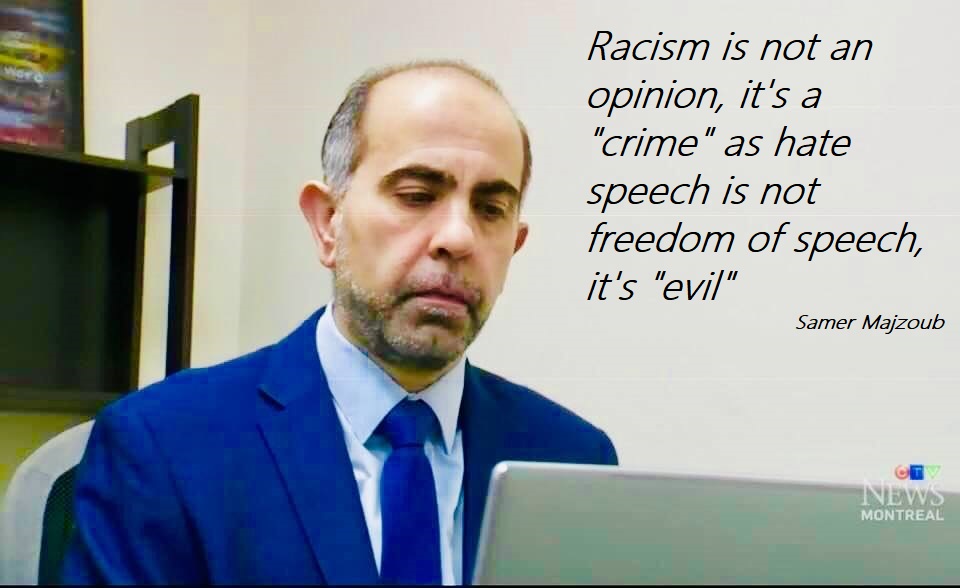
OPINION | Two Mindsets at the Table: The Businessman and the Economist

By Samer Majzoub

In an era when the outcome of a single negotiation can shift the course of markets, shape public confidence, or redraw trade lines, the mindset of the negotiator often matters as much as the substance of the agreement itself. Two familiar approaches stand out in public life and private boardrooms alike: the mindset of the seasoned entrepreneur and that of the careful economist.

The businessman’s perspective is shaped by experience in competitive markets, brand building, and deal making where results are visible and immediate. This style is assertive and pragmatic, relying on direct pressure, clear leverage, and a willingness to test limits in pursuit of favourable terms. It often treats negotiation as a contest in which decisive action and a clear win can break impasses and deliver quick results.

The economist’s approach, by contrast, draws on an analytical view of how decisions echo through broader systems. Guided by data, risk analysis, and long term considerations, this mindset values balance, stability, and the resilience of the institutions involved. For the economist, the best agreements are rarely dramatic or headline grabbing. Instead, they are designed to be durable, reasonable, and unlikely to produce unintended consequences that could undermine their benefits in the years to come.

These contrasting instincts each offer strengths and carry risks. A forceful push for immediate gain can break deadlocks, but if not carefully designed, may unravel later under pressure. An overly cautious approach may safeguard stability but struggle to deliver timely breakthroughs when urgency is needed. In practice, the best outcomes often emerge when the discipline of careful analysis meets the momentum of decisive action.

When these two ways of thinking find common ground, negotiations can lead to solutions that serve all parties more sustainably. A clear drive to secure tangible benefits, balanced by thoughtful planning and risk management, can help ensure that agreements do not simply deliver short term advantage, but also stand the test of time.

As global economic challenges grow more complex, leaders in both public policy and business would do well to remember that sustainable deals depend on more than a firm handshake or a headline announcement. They require the patience to weigh trade offs, the courage to act boldly when the moment demands it, and above all, the wisdom to keep tomorrow’s consequences firmly in view when decisions are made today.

Leadership; role mode, inspiration & human development…  

Leadership; role mode, inspiration & human development…  

Role model

One major concept of successful leadership is the notion of role model. Elements of role model circulate around; A) ability to inspire, B) passion, C) commitment to the wellbeing of community & society at large, D) Selflessness, E) team work and acceptance of others, F) Ability to overcome obstacles. E) Continuity and never give up spirit.

A role model is other-focused as opposed to self-focused. Role models are usually active in their societies, freely giving of their time and talents to benefit people, ability to recruit and very well public relation skilled.

Inspiration & human development

Inspiration in leadership is a key factor of keeping the vitals running in any project, successful work, or volunteering movement. Making people feeling important and appreciated, letting your team feels the sense of ownership over their projects, and giving space of free thinking and creativeness of implementation of work plans. All together plays the base in developing your team to be better performance level and more confidence in their creativity talents.

Various methods of management

There are many leadership styles that are considered as the main lines of “management” methods that may be pursued as proper titles of leadership approaches. Of the known leadership styles are;

  • Autocratic (Coercive Management Style).
  • Participative Management Style.
  • Delegative Management Style.
  • Persuasive Management Style.

Customized leadership style

It is important to recognize and understand different leadership styles including the circumstances and conditions in which they are mostly effective. However, one is unlikely to be a successful team leader simply by imitating already existing leadership styles. Leadership is not limited to providing a certain response in a certain situation. It’s about using your natural leadership strengths, talents and skills in an authentic manner to inspire and motivate others.

Along the way in both the career life and the activism one, although, each is based on a different territory, however, they both, career and activism, requires competent management, decision making, team spirit, outreach, work under pressure of time and the objectives of successful end-results. Throughout the years and the experiences exercised, one may adapt different “management” styles and sometimes combination of two or more of managing techniques depending on the project, available resources, timeframe, working condition, and expected outcome.

Choosing from the many administration methods, the participative leadership and delegative leadership styles both serves the purpose of true meaning leadership, human development by elevating self-esteem and set free of talented skills.  Also known as “laissez-faire leadership”, a delegative leadership style focuses on delegating initiatives to team members. This can be a successful strategy if team members are competent, dedicated, faithful, & committed.  

Although both the participative and the delegative leadership approaches have significant advantages, still, they both have their own challenges and difficulties; It can be very time-consuming in reaching to consensus. Also, in some cases, disagreement among members may lead to weakness of performance, splitting of efforts, and eventually to difficulty in achieving the original goals.

The principle remains to involve team members in the decision making process. Team members consequently feel included, engaged, implicated and motivated to contribute. Moreover, choice of the right leadership leads to the construction of strong team and build a crew that can develop ideas and actions plans, and enhance a positive work environment.